
Stöð 5 – Há- eða lághiti?
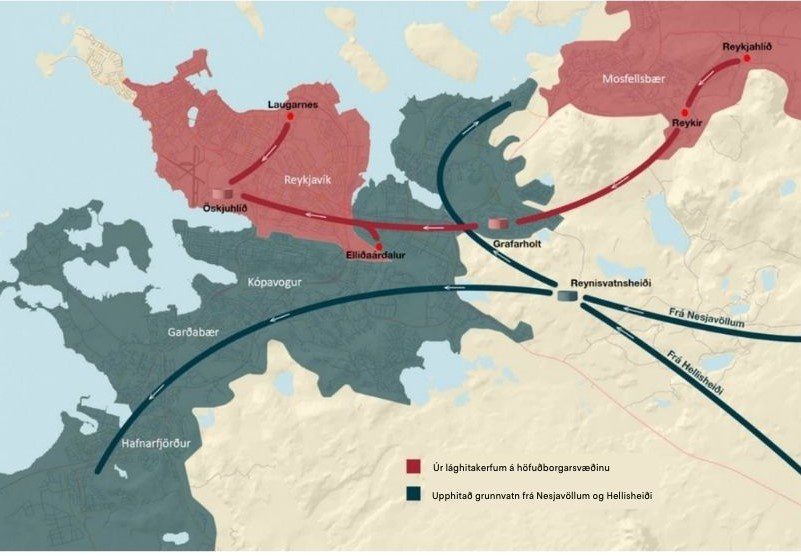
Heita vatnið í stórum hluta Reykjavíkur og Mosfellsbæ kemur úr borholum á lághitasvæðum, Gufuborinn Dofri sá um að bora margar af þeim heitavatnsholum. Restin af Reykjavík fær upphitað grunnvatn frá Nesjavöllum og Hellisheiði en þar eru háhitasvæði.
Á lághitasvæðum er allt að 250 gráðu heitt vatn á 1 km dýpi en á háhitasvæði er vatnið meira en 300 gráður á sama dýpi. Í vatni frá háhitasvæðum er mikið af uppleystum efnum og þess vegna er það notað til þess að hita upp kalt grunnvatn sem er svo látið renna í gegnum lagnirnar. Ef heita vatnið rynni beint í gegn myndu lagnirnar skemmast!
Hvaðan færð þú heita vatnið þitt?
Skoðaðu kortið til að komast að því.
High or low heat?
The hot water in a large part of Reykjavík and Mosfellsbær comes from boreholes on low heat areas, the steam drill Dofri drilled a lot of thoes boreholes. The rest of Reykjavík gets warmed up groundwater from Nesjavellir and Hellisheiði but those areas are high heat areas.
In low heat areas when you drill 1 km into the ground the water can be up to 250°C. However in high heat areas the water is more than 300°C at the same depth. In water from high heat areas there are a lot of solutes and that is why it is used to heat up fresh ground water which is then sent through the pipes. If the hot water would go directly through the pipes they would get ruined!
Where do you get your hot water from?
Use the map to find out.